
Discover how excess weight contributes to fat accumulation in the liver and what you can do to...
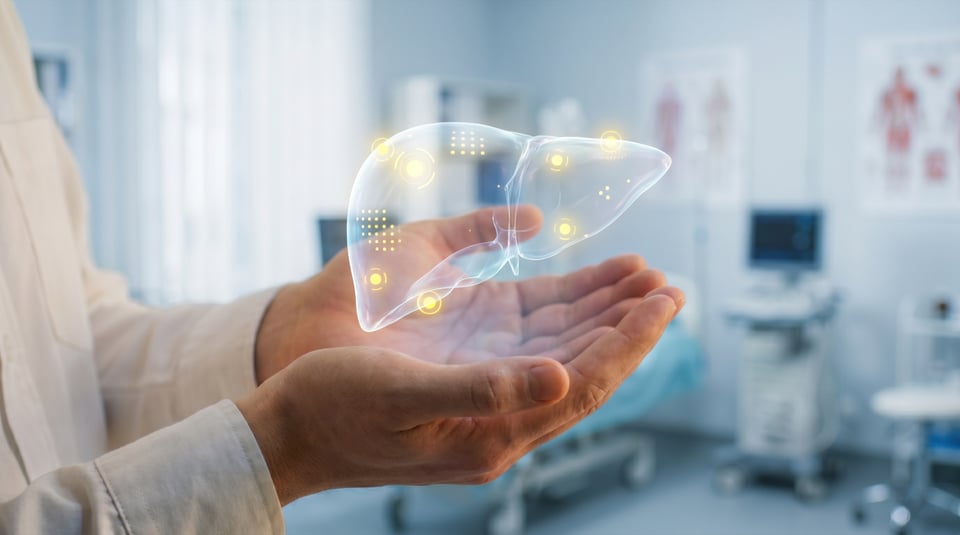
Discover how this quick, painless imaging technology provides valuable insights into liver scarring, fat accumulation, and overall liver health—empowering you to take a proactive approach to your well-being.
Understanding FibroScan: A Revolutionary Window Into Your Liver
Your liver performs hundreds of essential functions that keep your body healthy, but liver disease often develops without noticeable symptoms. FibroScan offers a quick, non-invasive way to assess liver health and identify potential concerns before symptoms appear.
FibroScan uses advanced ultrasound technology called transient elastography to measure two critical aspects of liver health: stiffness (which may indicate fibrosis or scarring) and fat content (known as steatosis). Unlike traditional liver biopsies that require needles and recovery time, FibroScan provides results through a simple external scan. Think of it as an ultrasound that not only creates images but also measures the physical properties of your liver tissue.
This innovative technology has transformed how healthcare providers evaluate and monitor liver conditions such as fatty liver disease, hepatitis, and cirrhosis. For patients, it offers access to valuable health information without the discomfort or risks associated with invasive procedures. Understanding what's happening inside your liver can help you make more informed decisions about your health.
The Critical Information FibroScan Reveals About Liver Fibrosis and Steatosis
FibroScan provides two essential measurements that help create a comprehensive picture of liver health. The first is the Liver Stiffness Measurement (LSM), expressed in kilopascals (kPa), which helps assess the presence and severity of liver fibrosis, or scarring. Fibrosis develops when the liver attempts to repair damage caused by conditions such as viral hepatitis, excessive alcohol use, or metabolic disorders. Detecting fibrosis early can help guide treatment and lifestyle decisions before more advanced liver damage occurs.
The second key measurement is the Controlled Attenuation Parameter (CAP), which evaluates hepatic steatosis—the accumulation of fat within the liver. Fatty liver disease affects millions of people and often goes undetected until significant damage has occurred. CAP scores help quantify fat levels, allowing healthcare providers to assess severity and monitor changes over time. This is especially important as metabolic dysfunction-associated steatotic liver disease (MASLD), formerly known as non-alcoholic fatty liver disease (NAFLD), continues to become more common alongside increasing rates of obesity and diabetes.
Together, these measurements provide a detailed snapshot of your liver's condition. Some forms of liver disease may be reversible or significantly improved when detected and addressed early. With appropriate interventions, including lifestyle modifications, medical management, or participation in clinical research, many individuals can take meaningful steps toward improving their liver health. FibroScan makes it possible to identify potential concerns earlier, when interventions may be most effective.
Why FibroScan Matters for Your Long-Term Health Journey
The value of FibroScan extends far beyond a single test result. Regular monitoring allows healthcare providers to track changes in liver health over time and evaluate the effectiveness of treatment plans. For individuals living with chronic liver conditions, FibroScan offers a safe and convenient alternative to repeated invasive procedures.
Liver disease is often referred to as a "silent" condition because symptoms may not appear until significant damage has occurred. By providing measurable insights into liver health before symptoms develop, FibroScan can help identify potential concerns earlier in the disease process. This proactive approach supports the growing emphasis on preventive healthcare and personalized treatment strategies.
Perhaps most importantly, understanding your liver health empowers you to become an active participant in your healthcare journey. Access to clear, objective information can help reduce uncertainty and support informed conversations with your healthcare provider. Whether you're managing a diagnosed condition, monitoring risk factors, or simply taking a proactive approach to your health, FibroScan offers valuable insight into one of your body's most important organs.
What to Expect During Your FibroScan Experience
If you're scheduled for a FibroScan, you can feel reassured knowing the procedure is simple, quick, and comfortable. The entire process typically takes just 10–15 minutes and requires no sedation or recovery time.
During the scan, you'll lie on your back with your right arm raised above your head, similar to the positioning used during a traditional ultrasound. A technician will apply a water-based gel to your skin and place the FibroScan probe between your ribs on the right side of your abdomen.
As the scan is performed, you may feel a slight vibration or gentle tapping sensation as harmless ultrasound waves pass through your liver tissue. These waves help measure liver stiffness while also assessing fat accumulation within the liver. The technology is painless and requires no needles, incisions, or recovery time.
Results are often available shortly after the procedure, allowing your healthcare provider to review the findings with you and explain what they may mean for your individual situation. Because FibroScan is non-invasive, it can be repeated as needed to monitor liver health over time, making it a practical tool for ongoing care and disease management.
Taking the Next Step: How Clinical Research Is Advancing Liver Health
While FibroScan has already transformed the way liver health is assessed, ongoing clinical research continues to advance our understanding of liver disease and explore potential new treatment options. Participating in clinical research studies may provide access to investigational treatments and allows individuals to contribute to medical research that may help improve future care for others living with liver conditions.
At Elevate Clinical Research, we're committed to increasing awareness of liver health and making liver assessments more accessible to our communities. That's why we're offering free FibroScans at our Lake Charles, Houston, and McAllen locations! Whether you're concerned about risk factors, interested in establishing a baseline for future monitoring, or simply want to learn more about your liver health, our team is here to help.
Taking charge of your liver health starts with understanding where you stand today. A FibroScan can provide valuable insight into your liver health through a quick, painless procedure that easily fits into most schedules. Early awareness can help support informed healthcare decisions and open the door to conversations about prevention, monitoring, and treatment options.
Click a button below to schedule your free FibroScan today and gain valuable insight into your liver health!